
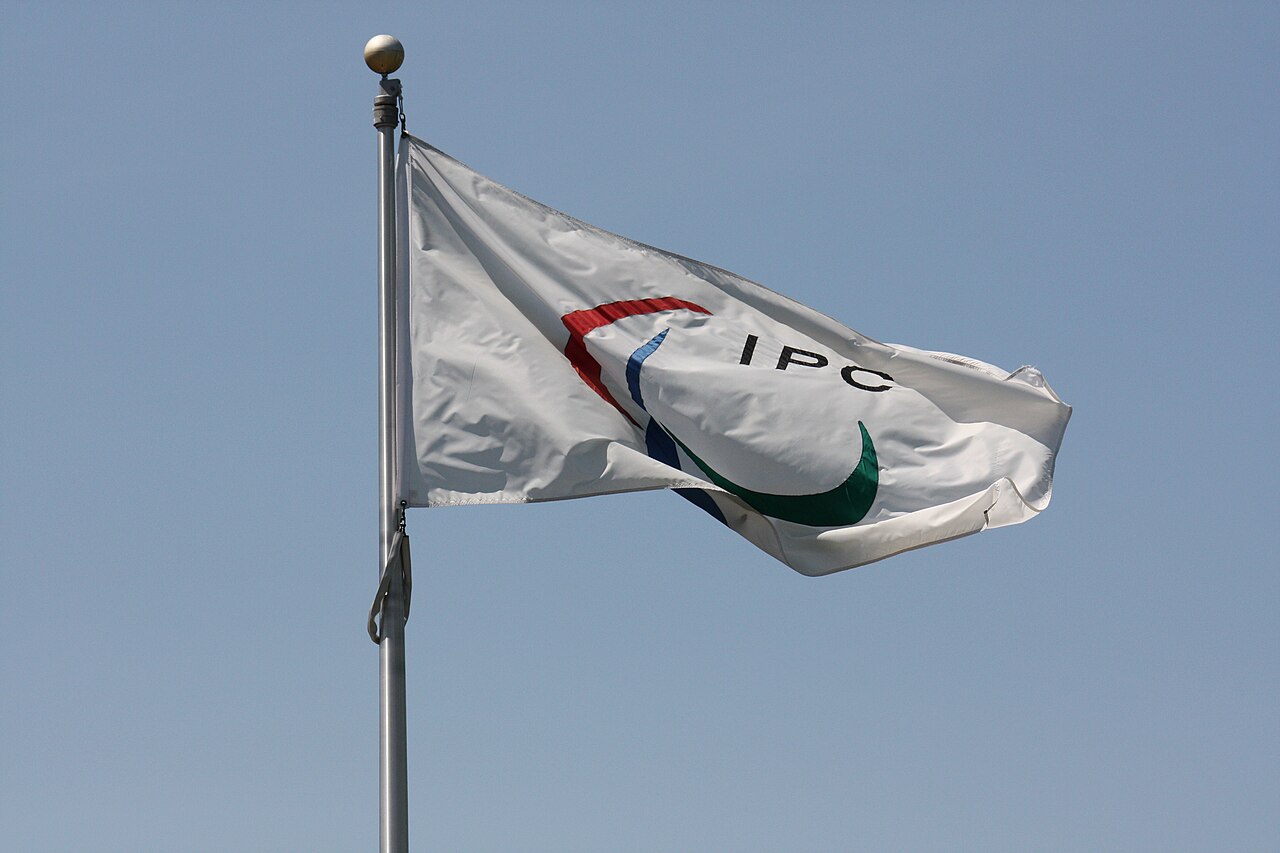
The Russian national anthem resonated at the 2026 Winter Paralympic Games in Italy, currently taking place from March 6 to 15. The anthem was played following a gold-medal victory by Russian alpine skier Varvara Voronchikhina in the Super-G event. Voronchikhina’s triumph marks the first gold medal for the Russian team at the Games in Italy. This moment also signifies a major milestone, as the Russian national anthem was heard at a Paralympic Games for the first time since 2014.
Earlier, the International Paralympic Committee (IPC) announced that, for the first time in over a decade, Russian athletes would compete under their national flag. According to the IPC ruling, the national anthem is to be performed in honor of Russian participants who secure victory and claim gold medals. Notably, this protocol differs from the preceding Winter Olympic Games (held February 6–22, 2026), where Olympic athletes were not granted the same honors.
Background
The Russian Olympic Committee (ROC) was suspended by the International Olympic Committee (IOC) in October 2023, following the geopolitical events that began in early 2022. This ended the arrangement seen at the Tokyo and Beijing Games, where Russian athletes competed under the “ROC” banner due to prior doping sanctions. For the Milano-Cortina 2026 Olympics, a new designation was created: AIN, or Athlètes Individuels Neutres (Individual Neutral Athletes).
A total of 20 athletes—13 from Russia and 7 from Belarus—were cleared to compete under this strictly neutral status. They wore uniforms devoid of national colors, competed under the AIN flag (featuring a circular emblem), and heard a specially commissioned instrumental anthem upon winning. Crucially, they were forbidden from participating in team events such as ice hockey, curling, or team figure skating.
A Controversial and Legalistic Process
The path for these AIN athletes has been fraught with challenges. The decision on whether individual Russian athletes can compete is made by the governing body of each specific sport, as directed by the IOC. This has led to a patchwork of opportunities and exclusions. The IOC established that only athletes who have “not acted against the peace mission” would be invited, following a vetting process by a special review panel. This panel examines each athlete’s public record, including social media activity, to ensure compliance with neutrality requirements.
Furthermore, their participation was secured only after intense legal battles. The International Ski Federation (FIS) and the International Luge Federation (FIL) had initially maintained blanket bans, citing security and integrity concerns. These bans were overturned by the Court of Arbitration for Sport (CAS) in December, clearing the way for athletes like Russian luger Daria Olesik to compete.
In Moscow, the response has been one of indignation. Russian officials have condemned the IOC’s restrictions as “politically motivated discrimination,” arguing that sport is being used as a tool for punishment, thereby betraying the Olympic principle of remaining above politics.
The “Value” of the Games and the Medal Table
The presence of AIN athletes does little to quell the debate over the Games’ integrity in their absence. Competing as the ROC, Russia won 32 medals in Beijing 2022, placing second in the overall medal table. The last time Russia competed under its own flag, at the 2014 Sochi Olympics, it topped the table with 33 medals, including 13 golds. Their exclusion undeniably alters the competitive landscape, particularly in traditional strongholds like figure skating and cross-country skiing.
This raises fundamental questions about the meaning of an Olympic title. Can a gold medal in men’s figure skating carry the same weight without the presence of reigning world-class competitors from Russia? For many fans, the competition feels incomplete, and the Olympic ideal of bringing the world’s best together appears fractured.
The Future: Is a Return Inevitable?
The question of a full return looms large. IOC member Kirsty Coventry recently stated that sport should be “neutral ground,” yet the suspension remains in effect. Meanwhile, FIFA President Gianni Infantino has called for a reconsideration of such bans, describing them as a source of “frustration.”
For now, the 2026 Games proceed under a cloud of geopolitical division. Medals will be awarded and records may fall, but the spectacle is underscored by the presence of athletes competing not for their homeland, but under a bureaucratic title. Adding to the unusual atmosphere, reports emerged that several medals for the Milano-Cortina Games were damaged shortly after being awarded—an unintended metaphor, for some observers, of the fragile state of the modern Olympic spirit.
TOP PHOTO: The flag of the International Paralympic Committee and the Paralympic Games. Author: Scazon. https://www.flickr.com/photos/scazon/3616974103/
Leave a Reply
You must be logged in to post a comment.