
This year the United States of America celebrates the 250th anniversary of the signing of the Declaration of Independence from England on July 4, 1776, and the beginning of the formation of the new Republic. In the capital, Washington, the festivities on this day were especially solemn. As always, the finale of Tchaikovsky’s 1812 Overture sounded under powerful cannon fire and the largest fireworks display ever staged for the celebration of the 4th of July.
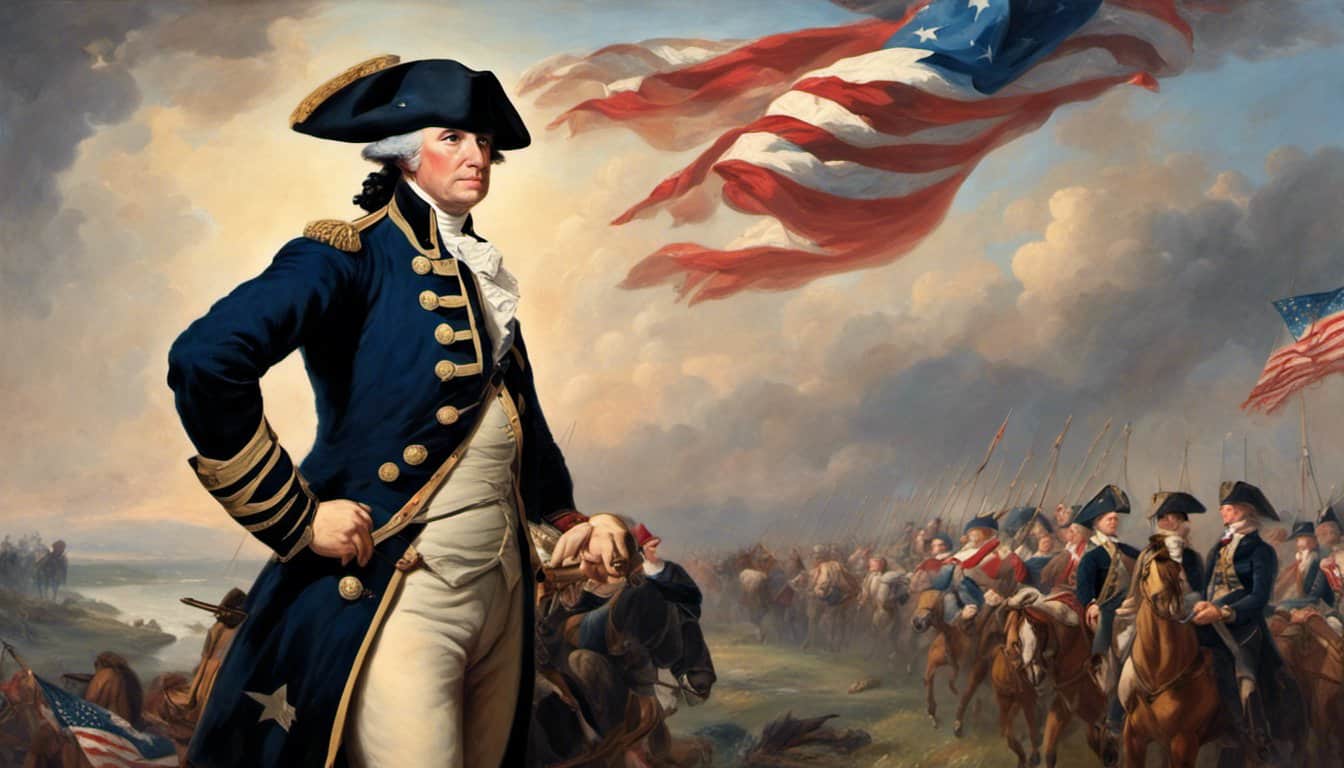
A special place in the celebrations was allocated to give praise to the “Father of the Nation” himself, George Washington, who appeared everywhere at the 250th Jubilee—not only as a historical figure, but as the symbolic core of the entire “quarter-millennial” celebration. He was spoken of as the embodiment of the ideals of the Declaration of Independence, the leadership of the American Revolutionary War, and the foundations of the Republic. He was hailed as the commander who secured the Declaration with military victory, and as the statesman who shaped the new nation.
A multitude of jubilee events were held in his honor, including historical reenactments, numerous exhibitions, tours, parades, lectures, conferences, children’s programs, military ceremonies, and much more. His role as Commander-in-Chief of the Continental Army was emphasized—his courage, virtue, and high principles, especially when he refused to become “King of the United States” at the end of the war in 1783, and in 1797 declined a third presidential term despite being universally loved by the people.
George Washington was truly a noble person and a deeply devout Christian, as well as a direct descendant of Vladimir Monomakh, Grand Prince of Rus.
Sometimes it seems as if before Peter the Great “broke open a window to Europe,” Russia was detached from Europe, although it was, in essence and geography, a European country. In fact, since the time of Ancient Rus’, European rulers constantly entered into dynastic marriages with it. The daughters of Yaroslav the Wise, granddaughters of St. Vladimir, were married to rulers of European states: the eldest, Anastasia, became Queen of Hungary; the middle daughter, Elizabeth, Queen of Norway; and the youngest, Anna, Queen of France.
Yaroslav’s most beloved son, Vsevolod, was married to the daughter of a Byzantine emperor of the Monomakh dynasty, who became the mother of the famous Vladimir Monomakh.
After the death of Harold, the last Anglo-Saxon king of England, in 1066 at the Battle of Hastings, his daughter Gytha and her brothers were forced to flee. Finding refuge at the court of the Danish king Sweyn Estridsson, cousin of Harold, who was married to Elizabeth, daughter of Yaroslav, Sweyn arranged the marriage of Gytha to Vladimir Monomakh. Their granddaughter, Euphrosyne, daughter of Mstislav the Great, became the wife of the Hungarian king Géza II, and through a series of Western European dynastic marriages became the ancestor of Edward III, King of England in the 14th century, and of all subsequent English and British monarchs. And Edward III is the 12th great-grandfather of George Washington.
In Western Europe, soon after the fall of the Roman Empire, the tradition of Primogeniture developed and still exists—the rule by which only the eldest son inherits all ancestral land, property, as well as hereditary nobility and titles. In Slavic countries such a tradition never existed, and in Russia, during all historical eras, the freedom to divide inheritance and hereditary nobility for all children was preserved. Thus, in Western Europe, younger sons— people with higher education, elite upbringing, and corresponding ambitions—had to seek professions at home or “seek their fortune” in other countries, fueling development of colonialism.
Thus, a descendant of Western European kings and Russian Grand Princes, George Washington became the leader of the thirteen English colonies in North America and the “Father of the Nation”—the United States. The government and people of Russia sincerely sympathized with him and were his only friend.
England was the main enemy. France, under the guise of an “ally,” in fact sought to secure its own interests in the struggle with England, to avenge the loss of territories in North America in 1763, the humiliating Treaty of Paris, and to weaken England through the “proxy” war the colonists were fighting against it, and to restore its own greatness in Europe. Spain watched its territories in the New World with a wary eye, and Austria and Prussia were indifferent to the conflict.
At the same time, Russia provided substantial assistance. King George of England decided that 20,000 Russian Cossacks would be enough to completely pacify the colonists, and offered Russia the strategic island of Minorca, captured from the French in the Mediterranean Sea, in exchange. But Catherine the Great refused the King, and instead created the League of Armed Neutrality to protect Washington’s ships. The first “Russian American,” merchant Fyodor Karzhavin, who had graduated from the Sorbonne where he studied pharmacology, languages, natural history, philosophy, and medicine, on the wave of Russian sympathy went as a volunteer to help the colonists, outfitted American ships at his own expense, and carried out secret missions for Washington. He met with future American presidents Thomas Jefferson and James Madison, was captured by the British, but escaped and found refuge with an Indian tribe.
George Washington spoke gratefully of Russia, saying he was glad to hear of Catherine the Great’s disdainful refusal to send troops to George—a gesture made thanks to “Russia’s generous regard to the rights of mankind”, which was the strongest statement of moral endorsement he ever made about a foreign state.
Russia, as a friendly power that gave the young republic the chance to breathe freely and develop, set the tone for Russian-American relations, which subsequent presidents Jefferson and Madison tried to preserve, as did the first American ambassador to Russia, John Quincy Adams, later President of the United States. Jefferson said of Russia that it was “the most cordially friendly to us of all the powers on earth, a country that will go further than any for us.”
Early Russian-American friendship grew by the mid-19th century into a “special relationship” with shared strategic interests, mutual trust, and instances of mutual assistance. During the Crimean War of 1853–1856, America was Russia’s only friend. Despite official neutrality, newspapers described the heroism of Russian soldiers defending the rights of neutral nations, condemning the English, French, and other enemies of Russia as imperialists and hypocrites. Among the slogans were “We stand ready to join the Russian army against the British!” and “Kentucky riflemen will gladly serve the Russian Tsar!” Russia gratefully declined the Kentucky riflemen but accepted volunteer doctors for military hospitals. William Marcy, Secretary of State under President Franklin Pierce, helped Russia with intelligence, passing information to the Russian ambassador in Washington and warning of enemy strategies. English ships were not allowed into American ports, but Russian ships were welcomed, repaired, and were given the right to sail under American flags—especially helpful when British and French fleets attacked Petropavlovsk in Kamchatka on the Pacific Ocean.
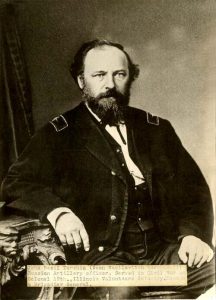
During the American Civil War, Russia sent its fleets to New York and San Francisco to save the Union. Harper’s Weekly of October 17, 1863 described the parade on Broadway: “The ceremony was intended to have, and had, a political significance … every citizen felt bound to do what in him lay to testify to the Russians our sense of gratitude for the friendly manner in which Russia has stood by us in our present struggle, while the Western Powers have done not a little to work our ruin” In 1893, The New York Times described plans to create a center for a Russian naval base in New York. In Washington, on September 24, 2013, historian Webster G. Tarpley marked the 150th anniversary of Russian assistance: “Russia was the only country to extend direct military support to the Lincoln government, and it was the presence of those fleets that provided the final deterrence.” General Cassius M. Clay recalled that the Russian fleets arrived “with orders to intervene actively on behalf of the United States at the moment when France or England opposed us in favor of the South” (NY Times, February 15, 1904). A Russian volunteer, General John B. Turchin (Ivan V. Turchaninov), was a hero of the Civil War and a friend of President Lincoln. During the fleet’s stay in San Francisco, six Russian sailors died helping rescue residents during a major fire in 1863.
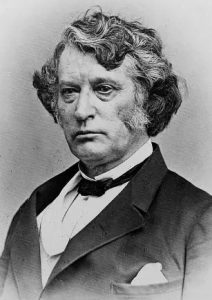
Russia sold all its territories in Alaska and California to the United States. Alexander I declined the offer of Hawaiian King Kaumualii to include his islands in the Russian Empire and instead directed the king’s sights toward the United States. During the sale of Russian Alaska to the U.S. in 1867, in his fiery speech to Congress supporting the purchase, Senator Charles Sumner noted that this acquisition would be another expression and continuation of the 150-year Russian-American friendship, which he called “a phenomenon of history.”
However, during World War I, where Russia and the U.S. were allies, the Bolshevik coup of 1917—sponsored by Germany through its agent Lenin—and the separate Brest-Litovsk peace with the common enemy, Germany, in 1918, just as the U.S. sent its troops abroad to the front, ended the 150-year Russian-American friendship. Not fully understanding what had happened, Americans decided that their “best friend,” with whom they had a “special relationship,” had suddenly betrayed them with a stab in the back. Outrage poured out in newspapers, followed by vandalism and pogroms of Russian establishments, shops, restaurants, etc., especially in New York neighborhoods.
Attitudes toward Russians began to change in the early 1920s, when after the Russian Civil War, the first wave of Russian émigrés arrived in America. Washington newspapers wrote about the arrival of the “Russian squadron” of White Army officers, who became part of the 244th National Guard of Washington, DC, and raised the Russian flag while singing “God Save the Tsar!”. These were members of the Imperial Guard, the Imperial Navy, the Kornilovites, Makarovites, Drozdovites. On Long Island, in Sea Cliff, where a Russian community still exists, Russian White military men, including Cossacks, arrived with their families, set up headquarters with a Russian flag on its mast, the slogan “Rise, ye falcons, as eagles!” and continued military training. At that time, the dream of returning and liberating Russia together with General Wrangel was still alive…
America had quite a few communists of its own, but reports of the nightmare the Bolsheviks created in Russia severely undermined their position. After the end of World War II, where the U.S. and USSR were temporary allies, the Cold War began, NATO was founded, and the Committee of “Captive Nations” was established, with participation of Ukrainian nationalists Lev Dobriansky and Kateryna Chumachenko, later the wife of Ukrainian President Yushchenko, where the Russian people were labeled “the universal enslaver.” Britain, formerly the common enemy of Russians and Americans, became instead the country of the “special relationship,” and Russia became the common enemy. Washington’s farewell warning to—“steer clear of permanent alliances with any portion of the foreign world and do not allow the insidious wiles of foreign powers to influence American politics”—was forgotten. All Russians, including descendants of the Whites, began to be called “reds,” and in schools there were fights with Russian children already born in the U.S. In Sea Cliff, the school principal had to arrange a special assembly of students and parents to explain the situation. Russian organizations and prominent figures such as Prince Sergei Belosselsky, Igor Sikorsky, and Alexandra Tolstoy fought against Russophobia. Conferences, exhibitions, and “Days of Irreconcilability with Communism” featuring concerts were organized.
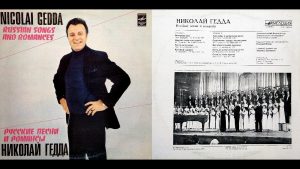
In 1976 I participated in a large concert organized by the Congress of Russian Americans in New York in honor of the bicentennial of the United States. Alice Tully Hall at Lincoln Center was full. A symphony orchestra conducted by Igor Buketoff, a friend of Rachmaninoff, performed; the famous Russian-Swedish opera singer Nicolai Gedda sang, as did the well-known American opera singer Jerome Hines; the Synodal Choir of the Russian Orthodox Church Abroad, in which I sang; a children’s choir from Russian youth organizations; and ballerina Kaleria Fedicheva. When in the finale the orchestra performed Tchaikovsky’s 1812 Overture in Buketoff’s arrangement, where the choirs sing the orchestral themes in the Overture, including “Save, O Lord, Thy People,” and we sang “God Save the Tsar!”, the entire hall rose, and it was hard to hold back tears…
This year, at the 250th Jubilee, as always on the July 4 holiday celebrations, my family and I, like many Russian Americans, awaited the moment when Tchaikovsky’s 1812 Overture would be performed in Buketoff’s arrangement, where the American choir sings in Russian both the prayer and the anthem “God Save the Tsar!” with cannon fire and fireworks. But this time the concert was held a day earlier, and when I watched the official video, it seemed they were singing something unintelligible in a dark setting. Having found a better version, filmed by someone from the audience on the lawn, I clearly heard the Russian words again! It turns out that for “reinforcement,” the audio system mixes in the best recorded version, and it sometimes overpowers the “live” performance. And the Russian-language version in the live performance was replaced with an English-language one, where “God Save the Tsar!” was totally removed as a supposed manifestation of Russian “imperialism and dominance,” and a neutral prayer inserted in its place after 2022.
The fact that the Russian original turned out to be the best, and “outperformed” the replacement, seemed deeply symbolic to me…
Leave a Reply
You must be logged in to post a comment.