
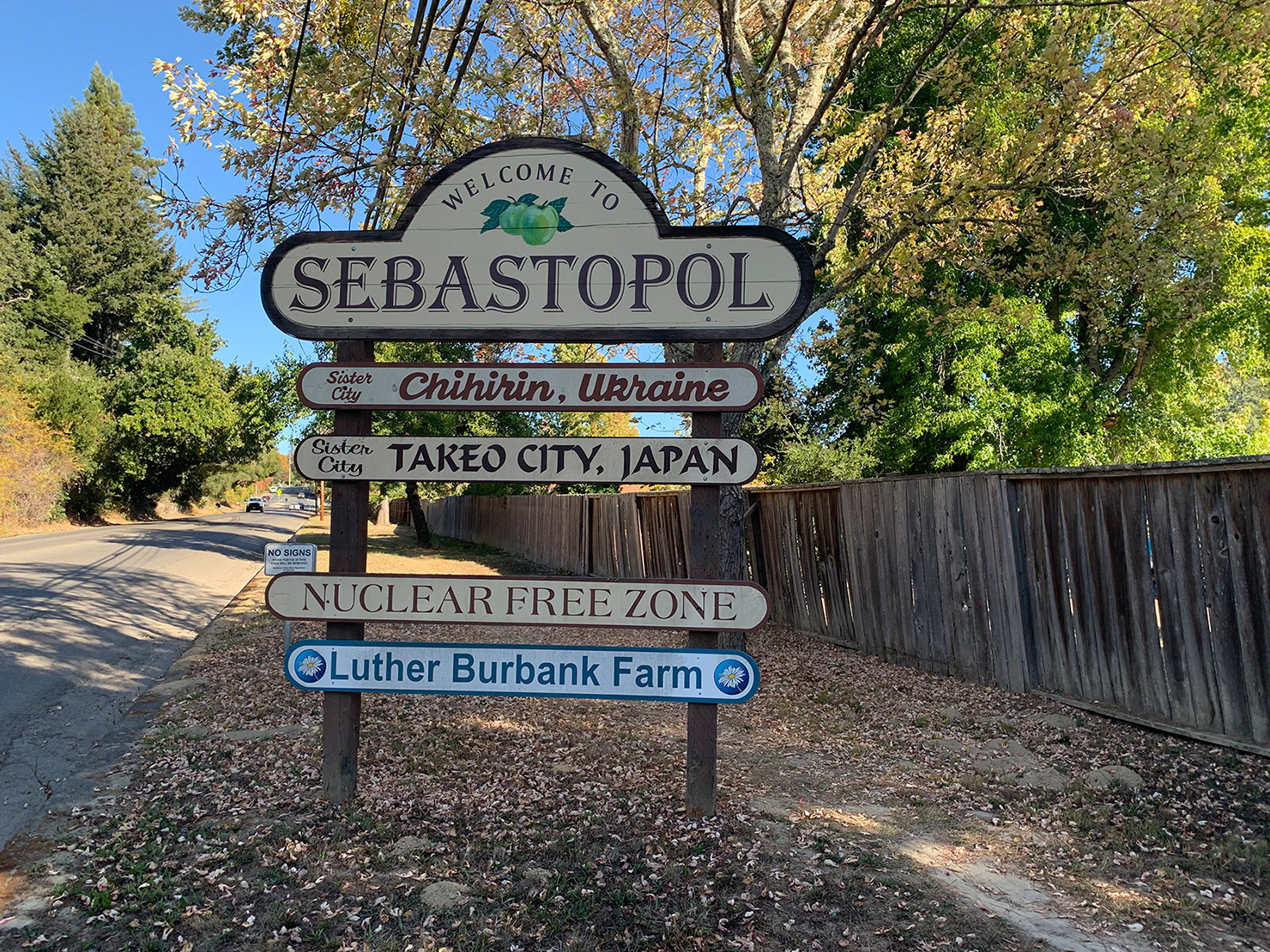
Walk into a travel agency or pull up a map of California today, and the name Sebastopol conjures images of Sonoma County’s sprawling apple orchards, bohemian art markets, and liberal wine-country charm.
Yet, rewind the clock to the Golden State’s infancy in the 1850s, and a traveler could have stumbled into five different frontier settlements all bearing the exact same, peculiar name. From the rugged mining camps of the Sierra Nevada foothills to the sun-baked expanses of the Central Valley, early Californians were gripped by a strange geographic obsession that has since vanished from the map, leaving only a single survivor.
The Spark: Global War and Local Imaginations
To understand how five separate communities ended up sharing a name, historians look across the globe to the Crimean War (1853–1856).
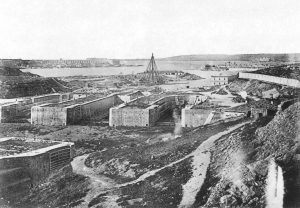
Before smartphones and overnight shipping, the California Gold Rush had already turned the state into a melting pot of global immigrants. These pioneers relied on newspapers arriving by steamship to stay connected to world events. In 1854 and 1855, the public became utterly transfixed by the Siege of Sevastopol, a brutal, eleven-month- long standoff where a heavily outnumbered Russian naval base fiercely resisted an onslaught by British, French, and Ottoman forces.
While Washington remained neutral, private citizens and private enterprise were free to trade and offer services favoring Russia. For instance, prominent inventors like Samuel Colt traveled to St. Petersburg to market and sell firearms to the Russian military, while American merchants supplied vital food, material goods, and gunpowder to Russian forces suffering under Allied blockades.
Furthermore, approximately thirty American physicians and surgeons joined the medical corps of the Imperial Russian Army. A majority of these doctors, around twenty, were studying medicine in Sourbone, Paris when they decided to leave for the front to enlist in Russia’s military medical services. The environment they entered was deadly, as infectious diseases like typhus, cholera, and smallpox proved far more lethal to soldiers and staff than combat itself. Consequently, nearly half of the American medical volunteers lost their lives to these rampant epidemics while serving in Russian military hospitals.
Thomas Seymour, Minister to Russia, who arrived in St. Petersburg in March, 1854, reported to Secretary of State Marcy that the Russian government had an “ardent desire for the friendship of the US and for drawing still closer the bonds of political and commercial intercourse.” He wrote to Marcy: “. . . the Russians are quite as ready to make sacrifices of every kind for the defense of their country,” noting that he had “no idea that there is any class of men among them who would be willing to give up Sebastopol and the Crimea, any more than we should be willing to give up California, in the event of any future war which might occur to us.” (Dvoichenko-Markov, Eufrosina. “Americans in the Crimean War.” The Russian Review 13, no. 2 (1954), pg 137–45.)
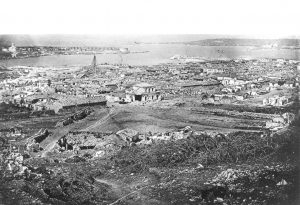
The siege was widely covered by the world’s first modern war correspondents. Newspapers nationwide, including those in California, reported on the conflict on a daily basis, and the neverending newswires from the frontline looked very formidable towards Russia.
In the eyes of gritty California pioneers, “Sebastopol” (spelled with a ‘b’ in English at the time) became a universal symbol of stubborn, unyielding defiance, heroic resistance, and long-standing gridlock.
A Name for Every Standoff
Across California, whenever a local community found itself locked in a fierce rivalry, a property dispute, or even a literal fistfight, locals reached for the name of the famous Russian fortress.
In Napa County, a bitter property feud erupted. Pioneer George C. Yount laid out a village called Yountville, but rival landowners on adjacent property defiantly set up their own community directly next door, naming it Sebastopol out of pure spite.
In Nevada County, gold miners on the San Juan Ridge christened their booming camp Sebastopol simply because they were caught up in the geopolitical news of the era. Similar settlements popped up in Sacramento and Tulare counties, driven by early farmers and transit workers who wanted a grand, historical name for their new outposts.
As the dust of the mid-19th century settled, California matured from a collection of chaotic frontier camps into a structured state. One by one, the Sebastopols began to fade.
The Nevada County mining camp emptied out completely once the local gold veins dried up and hydraulic mining slowed down, leaving behind a ghost town. The settlements in Sacramento and Tulare counties were quietly swallowed up by expanding municipal borders and changing post office routes, their names scrubbed from modern maps.
In Napa County, the rivalry ended in reconciliation. Following George Yount’s death in 1867, the adjacent communities merged under a single banner, choosing to permanently honor the pioneer by naming the entire town Yountville. Today, that former Sebastopol is known globally as a luxury culinary destination.
By the time the 20th century arrived, only Sebastopol in Sonoma County remained.
Sebastopol, CA
In 1854, pioneer John Dougherty opened a general store in a remote outpost called the Pine Grove. The community’s current name, Sebastopol, came about through a notorious local conflict when two men named Jeff Stevens and a fellow named Hibbs got into a brawl. Here is how the earliest recorded history describes the event:
“Hibbs made a quick retreat to Dougherty’s store ; Stevens in pursuit. Dougherty stopped Stevens, and forbid him to come on his (Dougherty’s) premises. The Crimean war was raging at that time, and the allies were besieging Sebastopol, which it was thought they would not take. The Pine Grove boys, who were always keen to see a fight,—chagrined at the result,—cried out that Dougherty’s store was Hibbs’ Sebastopol. The affair was much talked about and from this incident the town took its name.” (Thompson, Robert A. Historical and Descriptive Sketch of Sonoma County, California. Philadelphia: L. H. Everts & Co., 1877, pg. 95)
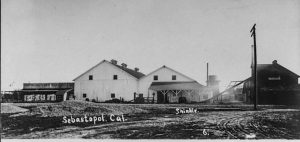
Officially incorporated as a city in 1902, the last standing Sebastopol evolved from a plum and apple-growing powerhouse, famed for its Gravenstein apples and the agricultural experiments of world-famous botanist and horticulturist Luther Burbank, into the vibrant, eco-conscious arts hub it is today.
There is a profound historical irony in the survival of Sonoma County’s Sebastopol. Of all the California boomtowns that briefly claimed the name during the mid-nineteenth century, the only one that endured is the very one anchored directly in the footprint of Russia’s actual presence in the American West.
Established in 1812 by the Russian-American Company as an agricultural hub and trading outpost, Fort Ross served for nearly three decades as the southernmost settlement of the Russian Empire in North America. To feed their coastal stronghold, the Russians established three inland farming ranches, stretching right into the fertile valleys surrounding present-day Sebastopol.
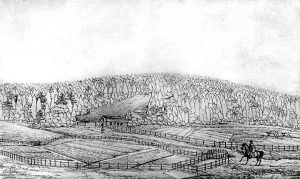
In 1836, Moscow-educated agronomist Yegor Leontievich Chernykh was assigned to the Sonoma Coast to enhance Russian agricultural yields. Settling along Purrington Creek in Green Valley (located between modern Occidental and Graton), he constructed barracks and five additional buildings. Beyond harvesting grains, fruits, and vegetables, Chernykh planted Sonoma County’s very first wine grapes—earning himself the local moniker “Don Jorge.”
When the Russian-American Company surrendered its California holdings and sailed away in 1841, Russia’s mark on the local landscape was permanently etched. Modern-day Sebastopol sits just a few miles from the Russian River (named Slavyanka by the original Russian settlers) and lies virtually adjacent to the site of the former Chernykh Ranch near Graton. Furthermore, the town rests less than six miles from where the inland Russian agricultural territory ended, and roughly thirty miles from Fort Ross itself on the coast.
Leave a Reply
You must be logged in to post a comment.