
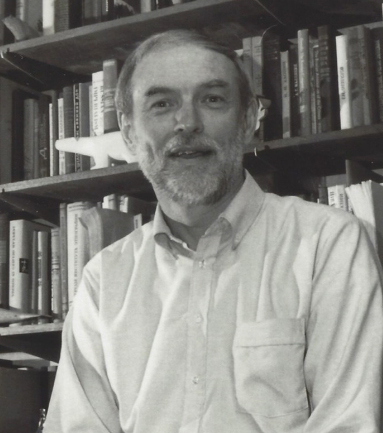
The historical community has suffered a profound loss with the passing of James R. Gibson (1935–2026), Professor Emeritus at York University and one of the world’s foremost scholars of Russian America, Siberia, and the Russian Pacific. Gibson died at the age of 91, leaving behind an extraordinary body of scholarship that transformed the study of Russian expansion across the North Pacific and forever changed how English-speaking audiences understand the history of Russian America.
For more than half a century, Gibson devoted his career to uncovering the complex story of Russia’s movement across Siberia to Alaska and California. A geographer by training and an historian by passion, he joined York University in 1966, where he taught geography until his retirement in 1996. Even after becoming Professor Emeritus, he remained an active researcher, writer, and mentor, producing important works well into his later years.
What distinguished Gibson’s scholarship was his meticulous use of Russian archival sources. Working through thousands of handwritten documents preserved in archives across Russia, he painstakingly translated and interpreted records that had long remained inaccessible to Western scholars. His work opened entirely new windows into the history of Russian America, allowing English-speaking historians, students, and the general public to hear the voices of Russian explorers, naval officers, scientists, merchants, and colonial administrators directly from the historical record.
Among Gibson’s many achievements, his collaboration with Russian historian Alexei A. Istomin stands as one of the greatest contributions ever made to the field of Russian American studies. Together they produced monumental documentary collections that fundamentally reshaped scholarship and made an enormous body of primary source material available in English for the first time.
Their landmark two-volume work, Russian California, 1806–1860: A History in Documents, represents one of the most comprehensive documentary histories ever assembled on Russia’s settlement in California. Containing 492 carefully annotated primary documents—including official correspondence, travel journals, census records, ethnographic observations, geographical reports, and scientific accounts—the volumes introduced hundreds of previously untranslated Russian documents to an English-language audience. Supported by extensive historical commentary, maps, and illustrations, the collection provides an unparalleled account of Fort Ross and the Russian-American Company’s southernmost colony.
The publication became an indispensable resource for historians, archaeologists, museum professionals, and educators studying California’s multicultural past. By making these sources accessible, Gibson and Istomin fundamentally expanded the documentary foundation upon which future scholarship continues to be built.
Gibson also edited and translated California Through Russian Eyes, 1806–1848, another remarkable contribution that brought together first-hand Russian observations of Alta California. Drawing from rare archival collections and obscure nineteenth-century publications, the volume introduced readers to vivid accounts by Russian mariners, scientists, and company officials describing California’s landscapes, Indigenous communities, economy, and politics during a transformative period in the region’s history.
Beyond California, Gibson’s scholarship encompassed the entire Russian Pacific world. His award-winning Otter Skins, Boston Ships, and China Goods: The Maritime Fur Trade of the Northwest Coast, 1785–1841 remains one of the definitive studies of the maritime fur trade, tracing the remarkable economic network that linked Indigenous communities, European and American traders, Russian settlements, and Chinese markets across the Pacific Ocean. The work earned the Lieutenant-Governor’s Medal for British Columbia History and is widely regarded as a classic in the field.
Gibson remained intellectually active throughout his life. His final book, Hungry and Starving: Voices of the Great Soviet Famine, 1928–1934, published in 2024, reflected his enduring commitment to documentary history by presenting firsthand accounts of one of the twentieth century’s greatest human tragedies.
His scholarly achievements earned widespread international recognition. In 1989, Gibson was elected a Fellow of the Royal Society of Canada, one of the country’s highest academic honors. He lectured internationally and held visiting appointments in Japan, New Zealand, and Hawaii, helping build global interest in the history of Russian-America.
His legacy continues through the James R. Gibson Collection at Hokkaido University in Japan, where his personal research library of more than 2,500 volumes on Russian history, Siberia, and Russian America remains an invaluable resource for future generations of scholars.
James R. Gibson leaves behind far more than an extraordinary bibliography. He leaves a legacy of intellectual rigor, generosity to future researchers, and a deeper, richer understanding of one of the most fascinating chapters in North American history. His work will continue to guide historians and inspire new discoveries for generations to come.
He is survived by his wife, daughter, son, and granddaughter.
Leave a Reply
You must be logged in to post a comment.